

TL;DR Quick Summary:
-
The 2026 Forecast: The latest October update confirms that the autumn season is running noticeably late in major cities. Tokyo’s autumn foliage is expected to peak around Mid-November, with Kyoto peaking late on Early December.
-
Regional Timing: While the absolute highest elevations in Hokkaido have turned, many of the most dramatic spots in Tohoku and Chubu are still preparing for their spectacular late October and November peaks.
-
The 2026 Transit Crisis: Navigating Japan’s rail network with luggage has become increasingly difficult. Strict rules on the Tokaido, Sanyo, and Kyushu Shinkansen lines require mandatory advance reservations for suitcases over 160 cm, with a ¥1,000 onboard penalty and forced relocation for non-compliance.
-
Overtourism Challenges: Inbound demand remains intensely high along the Golden Route. Kyoto introduced a revised tiered lodging tax in March 2026, and private alleys in the historic Gion district remain strictly closed to tourists.
-
The Solution: Pivot to crowd-free regions like Fukui—which is now easily accessible via the new Shinkansen extension. Booking a 3-Day (or longer) Private Chauffeur Expedition secures your dedicated bilingual driver, bypasses strict bullet train luggage rules, and lets our experts design the perfect bespoke routing.
Japan in autumn is a transcendent experience. The vivid crimson maples (momiji) and golden ginkgo trees create a breathtaking backdrop against centuries-old temples, quiet moss gardens, and dramatic mountain gorges. However, traveling to Japan in 2026 requires a radically different strategy than it did just a few years ago.
With inbound demand remaining incredibly robust, winging your autumn trip on public transit—or staying exclusively on the Tokyo-Kyoto “Golden Route”—means spending your vacation navigating intense crowds.
If you want to experience the majesty of Japan’s autumn with serenity and exclusivity, you need to head into the regions. But getting there requires mastering a new era of Japanese travel logistics. Here is your insider guide to navigating the 2026 autumn leaves season in absolute comfort.
The Official 2026 Autumn Leaves Forecast (Updated October)
Because peak foliage depends heavily on temperature drops, the dates shift slightly every year. Based on the most recent October updates, the autumn leaves season is noticeably late in the major metropolitan areas.
Furthermore, while the season is starting up north, do not expect everything to be at peak color right now. The absolute highest peaks in Hokkaido are seeing color. However, many of the best regional viewing spots in Tohoku and Chubu are still preparing for their late October or November peaks.
| Destination | Estimated Peak Color (2026) | Current Crowd Level Prediction |
| Hokkaido (Daisetsuzan) | Mid-September to Mid-October | Moderate |
| Tohoku (Oirase/Naruko) | Late October to Early November | Low to Moderate |
| Fukui (Kuzuryu / Yokokan) | Mid-November to Late November | Low |
| Tokyo (City Parks) | Mid-November – Early December | Very High |
| Kyoto & Nara | Mid-November – Early December | Extreme |
Pro Tip: If your flights are booked for early November, central Tokyo will still be mostly green. You must head north to Tohoku or deep into the Chubu region to find peak colors.
Japan’s tourism infrastructure is straining under the weight of its own popularity. The concentration of tourists on the Golden Route remains extremely high. For travelers, this means packed bullet trains (Shinkansen), long queues for local buses, and heavily congested photo spots where capturing a serene moment is nearly impossible.
In response to this demand, local municipalities have enacted structural changes to preserve their heritage:
-
Kyoto’s Tiered Accommodation Taxes: As of March 2026, Kyoto introduced a revised five-tier lodging tax system to help offset infrastructure strain.
-
Gion Alley Closures: Many private alleys in the historic Gion district remain strictly closed to tourists, a regulation that has been in place to protect local residents from overcrowding.
Furthermore, traveling with family luggage has never been more complicated. To combat aisle congestion, strict oversized luggage rules are now heavily enforced on the major Shinkansen lines connecting Tokyo, Kyoto, Osaka, and Kyushu.
-
The 160 cm Rule: If the total dimensions (Length + Width + Height) of your suitcase exceed 160 cm, you are legally required to book a specific “Seat with an oversized baggage area” in advance.
-
The Penalty: If you board the train without this specific reservation—which often sells out weeks in advance during the autumn peak—train conductors will charge a ¥1,000 penalty fee per bag and force you to relocate your luggage to a designated space away from your seat.
When you combine these strict transit regulations with Kyoto’s new taxes and general Golden Route congestion, the takeaway is clear: You can no longer rely on simply showing up and hopping on a train. You must control your environment.
The “Day Trip” Fallacy: Why You Need a Multi-Day Charter

When travelers realize Kyoto is too crowded, they instinctively look for regional “hidden gems” to visit for the afternoon. But here is the most common mistake made by luxury travelers in 2026: trying to visit these remote regions as a day trip.
Attempting a one-day private charter from Tokyo to Tohoku, or Kyoto to Fukui, is fundamentally flawed for several reasons:
-
High Chauffeur Demand: There is intense competition to secure premium, bilingual chauffeurs for long-distance regional routes during the autumn peak.
-
Exorbitant Dispatch Costs: Repositioning a luxury vehicle and a bilingual driver for a single day trip across prefecture lines incurs massive highway tolls, deadhead dispatch fees, and overtime costs. The return on investment for a one-day trip simply isn’t there for the traveler.
-
Travel Fatigue: Spending 6 to 8 hours round-trip in a car for a single afternoon of sightseeing ruins the relaxed, premium atmosphere of your vacation.
The Insider Solution: To actually experience these regions in comfort, you need a minimum 3-day private chartered expedition. By booking a multi-day charter, your dedicated bilingual driver stays with you. This unlocks point-to-point luggage transfers (completely bypassing the Shinkansen luggage crisis), seamless check-ins at remote boutique ryokans (inns), and the ability to explore scattered, rural heritage sites that train routes completely miss.
2 Crowd-Free Regional Expeditions for Autumn 2026
If you are ready to invest in a multi-day private charter, these two regions offer the most spectacular, crowd-free autumn viewing in Japan. Both regions feature incredible scenic spots that are widely recognized as top-tier autumn destinations.
1. The Fukui Serenity Route (Recommended: Mid-to-Late November)
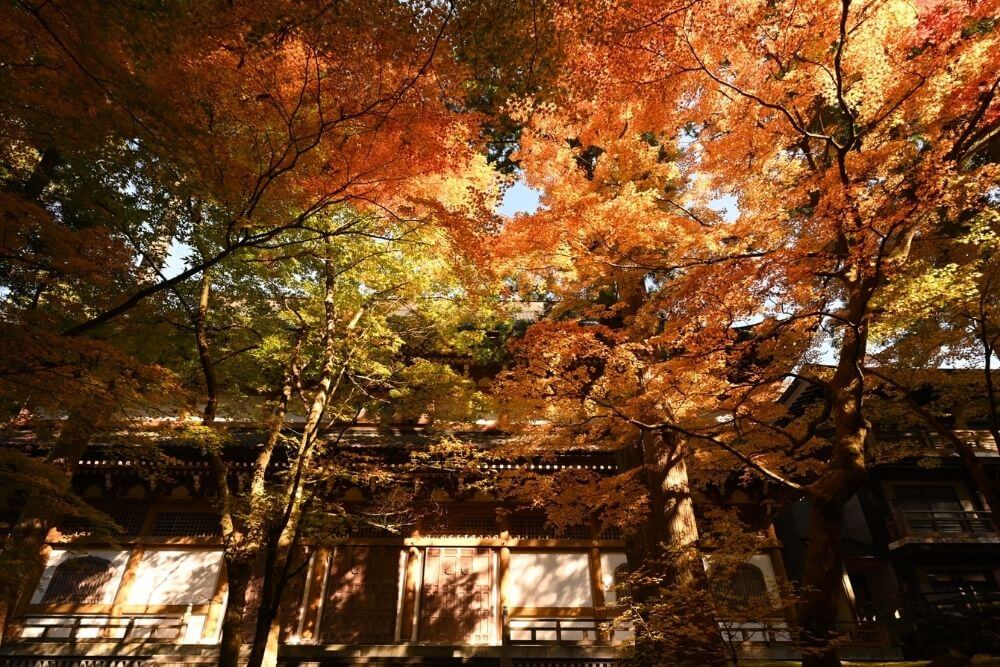

Fukui is now significantly more accessible thanks to the recent Hokuriku Shinkansen extension. Remaining beautifully untouched by mass tourism, a private car over 3 to 4 days allows you to seamlessly navigate the prefecture’s scattered coastal and mountainous gems:
-
Yokokan Garden: A stunning Edo-period villa surrounded by a large pond. In late November, the reflection of the crimson maples on the water’s surface is mesmerizing—with a fraction of the crowds you’d find in Kyoto.
-
Eiheiji Temple: The sprawling, active headquarters of Soto Zen Buddhism. Nestled deep in an ancient cedar forest, the autumn colors contrasting with the temple architecture offer a deeply spiritual, quiet experience.
-
Lake Kuzuryu: Deep in the mountains, this breathtaking lake is surrounded by beech and maple forests. A private driver allows you to cruise the “Bridge of Dreams” with the windows down, stopping for photos wherever you please.
2. The Tohoku Mountain Explorer (Recommended: Late October to Early November)
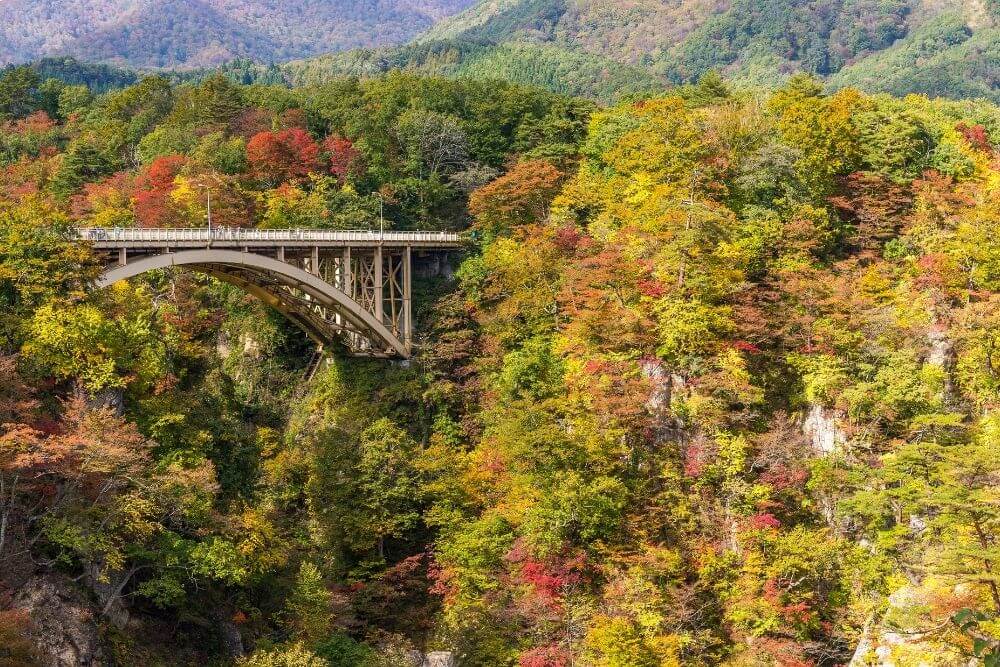
Located north of Tokyo, the Tohoku region offers some of the most dramatic autumn landscapes in the world. The 5 to 7 days private charter are essential here, as the best sites are deep within the national parks.
-
Oirase Gorge (Aomori): Walk alongside crystal-clear water flowing through a vibrant canopy of red and gold.
-
Yamadera (Yamagata): A mountaintop temple requiring a scenic hike up stone steps, rewarding you with panoramic views of sweeping autumnal valleys.
-
Naruko Gorge (Miyagi): A stunning bridge view suspended over a valley of autumn fire.
With a dedicated vehicle, you can hike these gorges at your own pace while your driver meets you at the other end, eliminating the need to wait for infrequent rural buses.
Experience the Milocal Japan Difference: Let Us Build Your Route
At Milocal Japan, we specialize in high-end, frictionless travel logistics. We do not do rushed, exhausting day trips to the countryside. Instead, we craft bespoke, multi-day (3+ days) private chartered expeditions designed to immerse you in Japan’s regional beauty.
Our experienced team secures the country’s most sought-after English-speaking drivers, handling all complex routing, toll calculations, and ryokan logistics so you can simply sit back in climate-controlled luxury and watch the autumn colors roll by.
Ready to bypass the 2026 transit crisis and travel to Japan the easy way?
Dragging oversized luggage through crowded stations doesn’t have to be part of your vacation. Milocal Japan—your dedicated team for high-quality private charters. Let us handle the strict new transit rules and the heavy lifting. Explore our favorite regional routes on our [Japan Destinations Page], or send your group details directly to our team on [WhatsApp] or via our [Contact Page] for a tailored quotation!

